

The short answer
Most DOLE complaints against small Philippine businesses start from unwritten rules and unclear payslips, not bad faith. A short, signed employee handbook (written in plain English with a natural Tagalog copy for frontline staff) paired with organized DTRs and transparent payslips prevents most disputes and protects you if a DOLE Single Entry Approach (SEnA) notice ever arrives.
On this page
What a small-business employee handbook must cover
You do not need a 60-page corporate manual. A clear 4-to-8-page starter handbook signed by every hire on Day 1 should spell out five essentials:
- Schedules, attendance, and overtime: Official shift hours, clock-in and clock-out method, grace period (if any), how lates and undertime are computed, and a prior written approval rule for overtime. Under Labor Code Articles 84 and 87 and the Omnibus Rules (Book III, Rule I, Section 4(c)), overtime "suffered or permitted" with employer knowledge is still compensable; a prior-approval policy lets you discipline unauthorized staying late, not withhold pay for work you knowingly allowed.
- Paydays and deductions: Semi-monthly pay dates under Labor Code Article 103, how payslips are delivered, and that only statutory and lawfully authorized deductions are taken off pay. Never treat a short payslip-question window (such as 5 days) as a waiver of underpaid wages—employee money claims prescribe in 3 years under Labor Code Article 306.
- Leave filing rules: Notice period for planned leave, medical certificate rules for sick absences, and which statutory leaves apply to your shop size (see our Philippine statutory leaves cheat sheet).
- Progressive discipline ladder: Clear offense levels (verbal coaching, written warning via Notice to Explain, unpaid suspension, dismissal) following the Twin-Notice Rule.
- Mandatory statutory workplace policies: Keep short posted policies for:
- All businesses: Anti-Sexual Harassment & Safe Spaces Act (RA No. 7877 and RA No. 11313 Sec. 17(c) / IRR Rule VI Sec. 33—post the law, define complaint procedures, and form a woman-headed Committee on Decorum and Investigation, or CODI, with at least 50% female members resolving cases within 10 working days), Occupational Safety and Health (RA No. 11058 & DOLE DO No. 252-25), workplace health programs (HIV/AIDS DO No. 102-10, TB DO No. 73-05, Hepatitis B DA No. 05-10, Mental Health DO No. 208-20), and a Data Privacy Notice (RA No. 10173).
- 10 or more staff: Add a Drug-Free Workplace Policy (DOLE DO No. 53-03).
Rolling out a handbook to existing staff: Putting workplace rules in writing for current employees does not violate Article 100 (Non-Diminution of Benefits) as long as you do not cut existing pay or benefits. Hold a short briefing so staff can ask questions; if someone refuses to sign the receipt page, record the briefing date and copy distribution with two witnesses.
Copy-paste starter handbook clauses (English + Tagalog)
Give staff a signed copy on Day 1 (or at your handbook rollout) and keep the signed acknowledgment page in their 201 file. Below is a compact English starter summary, followed by a natural workplace Tagalog version for frontline teams.
English starter clauses (attendance, pay, and conduct)
EMPLOYEE HANDBOOK - CORE WORKPLACE RULES (STARTER SUMMARY)

1. Attendance & Punctuality:
   - Clock in and out accurately using the [store kiosk / attendance app].
     Buddy punching (clocking in for another person) is serious misconduct.
   - Notify your supervisor at least [2 hours] before your shift if you are
     sick or facing an emergency. Three (3) consecutive unexcused absences
     without notice trigger a Return-to-Work Order and Notice to Explain.
2. Overtime & Rest Days:
   - Overtime work requires prior written approval from the owner or
     manager. Working unapproved overtime without management instruction
     is a policy violation subject to progressive discipline.
3. Paydays & Payslips:
   - Wages are paid semi-monthly on the [15th and 30th]. Review your
     itemized payslip after every payday and report any question within
     [5] days so we can check and correct errors right away.
4. Progressive Discipline (Due Process):
   - Minor attendance or policy breaches follow progressive steps:
     1st offense: Written coaching / warning
     2nd offense: Formal Notice to Explain (NTE) & Written Warning
     3rd offense: NTE (5 calendar days to answer) & Unpaid Suspension (1 to 3 days)
     4th offense or grave misconduct (theft, violence, falsification):
     NTE with 5 calendar days to answer, conference if requested, and
     written Notice of Decision (up to dismissal).
5. Safe & Respectful Workplace:
   - Harassment, bullying, and unsafe work practices are strictly prohibited
     under the Safe Spaces Act (RA 11313, handled through our CODI) and
     OSH Law (RA 11058). Full statutory health and privacy notices are
     posted in the workplace.

Acknowledgment: I received, read, and understood these workplace rules.
Employee Signature: _____________________   Date: ___________________
Tagalog employee starter clauses
GABAY NG EMPLEYADO - MGA PANGUNAHING PATAKARAN SA TRABAHO

1. Pagpasok at Oras ng Trabaho:
   - Mag-clock in at clock out nang tama sa [kiosk o attendance app ng kumpanya].
     Mahigpit na ipinagbabawal ang buddy punching (pag-clock in para sa iba)
     at ito ay itinuturing na mabigat na kasalanan (serious misconduct).
   - Magpaalam sa supervisor nang hindi bababa sa [2 oras] bago ang shift
     kung may sakit o emergency. Ang tatlong (3) sunod-sunod na pagliban nang
     walang paalam ay papadalhan ng Return-to-Work Order at Notice to Explain (NTE).
2. Overtime at Rest Day:
   - Kailangan muna ng nakasulat na pahintulot (written approval) mula sa
     may-ari o manager bago mag-overtime. Ang pag-overtime nang walang utos o
     approval ay paglabag sa patakaran at may karampatang disiplina.
3. Araw ng Sahod at Payslip:
   - Ang sahod ay ibinibigay tuwing [15 at 30] ng buwan. Suriin ang iyong
     payslip kada sahod at ipaalam agad sa loob ng [5] araw kung may tanong
     o mali upang ma-check at maitama kaagad.
4. Hakbang sa Disiplina (Tamang Proseso):
   - Para sa paulit-ulit na paglabag sa attendance o patakaran:
     Unang paglabag: Nakasulat na paalala (Written coaching)
     Pangalawang paglabag: NTE at Written Warning
     Pangatlong paglabag: NTE (5 calendar days para magpaliwanag) at Suspensyon (1–3 araw na walang bayad)
     Pang-apat o mabigat na kasalanan (pagnanakaw, pananakit, pandaraya):
     NTE na may limang (5) calendar days (kasama ang Sabado, Linggo, at holiday)
     para magpaliwanag, meeting o administrative conference kung hihilingin,
     at nakasulat na desisyon (hanggang pagkakatanggal sa trabaho).
5. Ligtas at Magalang na Lugar ng Trabaho:
   - Mahigpit na ipinagbabawal ang harassment, bullying, at anumang delikado
     o hindi ligtas na gawain sa trabaho sa ilalim ng Safe Spaces Act
     (RA 11313, na hahawakan ng aming CODI) at OSH Law (RA 11058). Nakapaskil
     sa workplace ang kumpletong patakaran sa kalusugan at data privacy.

Pagpapatunay: Natanggap, nabasa, at naunawaan ko ang mga patakarang ito.
Lagda ng Empleyado: _____________________   Petsa: __________________
DOLE SEnA survival guide and the 2026 venue rule
Under RA No. 10396 and DOLE DO No. 249-25 (issued February 7, 2025, superseding DO No. 151-16), almost every labor dispute begins with a free, mandatory 30-calendar-day conciliation-mediation process under SEnA (extendable by up to 15 calendar days by mutual agreement) before escalating to the NLRC. DO 249-25 also institutionalized online filing via DOLE-ARMS and allows employees to file a Request for Assistance (RFA) at the DOLE office nearest their residence, not just the workplace. A Single Entry Assistance Desk Officer (SEADO) facilitates 1 to 2 short conferences; you do not need a lawyer to attend.
What to do if a DOLE SEnA Request for Assistance (RFA) arrives:
- Attend or send an authorized representative: Two unjustified non-appearances lead to an automatic referral to the NLRC Labor Arbiter. If you are sick or out of town, request a reschedule in advance or send your manager or accountant with a signed Special Power of Attorney (SPA) stating their authority to negotiate and settle.
- Bring a 5-tab evidence folder (or whatever backup records you have): Pack (1) signed contract, Day-1 probationary standards, and handbook receipt; (2) DTR logs; (3) payroll registers, itemized payslips, and bank or e-wallet transfer proofs; (4) SSS, PhilHealth, and Pag-IBIG remittance receipts; and (5) any NTEs, Notices of Decision (NODs), resignation letters, or clearance sheets. Even if your folder is incomplete today, bring GCash receipts, signed cash vouchers, notebooks, and work-schedule texts rather than arriving empty-handed.
- Know what happens if demands are inflated: The SEADO cannot force either side to accept a figure. If you genuinely underpaid ₱4,500 in overtime or Service Incentive Leave, bring the clean math and settle through a voluntary, DOLE-witnessed Compromise Agreement and Quitclaim (binding under Labor Code Article 233 when supported by reasonable consideration). If a former worker demands an unreasonable amount you do not owe, decline politely; SEnA closes and issues a Referral so both sides present formal sworn evidence at the NLRC if the worker chooses to file.
2026 NLRC venue rule for remote and provincial staff: Under the 2025 NLRC Rules of Procedure (En Banc Resolution No. 09-25, effective January 13, 2026), Rule IV Section 1(a) lets workers file complaints at the Regional Arbitration Branch covering either the workplace or the complainant's residence, and Section 1(b)(iv) separately covers a telecommuting employee's alternative workplace. For small shops hiring remote or out-of-province staff, resolving disputes transparently before SEnA saves the cost of defending a formal case in another region.
Eight small-business HR myths that trigger DOLE complaints
| Myth owners still hear | Legal reality in the Philippines |
|---|---|
| 1. "Small shop or BMBE, so no benefits apply" | BMBE status only exempts minimum wage (RA No. 9178 Sec. 8); Day-1 SSS, PhilHealth, Pag-IBIG, and 13th month pay still apply (first-hire guide). |
| 2. "Probationary first, SSS after 6 months" | Illegal. Mandatory SSS, PhilHealth, and Pag-IBIG coverage starts on Day 1, and unremitted SSS shares carry criminal penalties under RA No. 11199. |
| 3. "No contract, so they are just a freelancer" | Labels never beat the four-fold test (especially control over work hours and methods). Misclassified staff can claim 13th month, overtime, and illegal dismissal. |
| 4. "Seen-zoned on Messenger means abandonment" | AWOL is not automatic abandonment; mail a formal Return-to-Work Order and NTE to their last known address. |
| 5. "Tell them not to come in tomorrow" | Verbal dismissal skips the Twin-Notice Rule, exposing you to ₱30,000 nominal damages (if just cause is proven) or reinstatement plus full backwages. |
| 6. "Hold final pay and COE until they pay damages" | Unproven losses cannot be deducted unilaterally without due process and proof (Labor Code Arts. 113 to 115), final pay is due within 30 days, and a COE is due within 3 days (offboarding guide). |
| 7. "Fail them at Month 5 without Day-1 criteria" | Without written Day-1 regularization standards, probationary staff are normally deemed regular from Day 1 (probationary kit). |
| 8. "Cash or GCash without a payslip is fine" | Cash is legal, and bank or e-wallet payout works cleanly with written employee consent and no fee burden (Labor Code Arts. 102 and 104; DOLE LA No. 26-20), but missing DTRs and itemized payroll records leave you without proof during an inspection. |
Three informal habits that escalate into SEnA claims
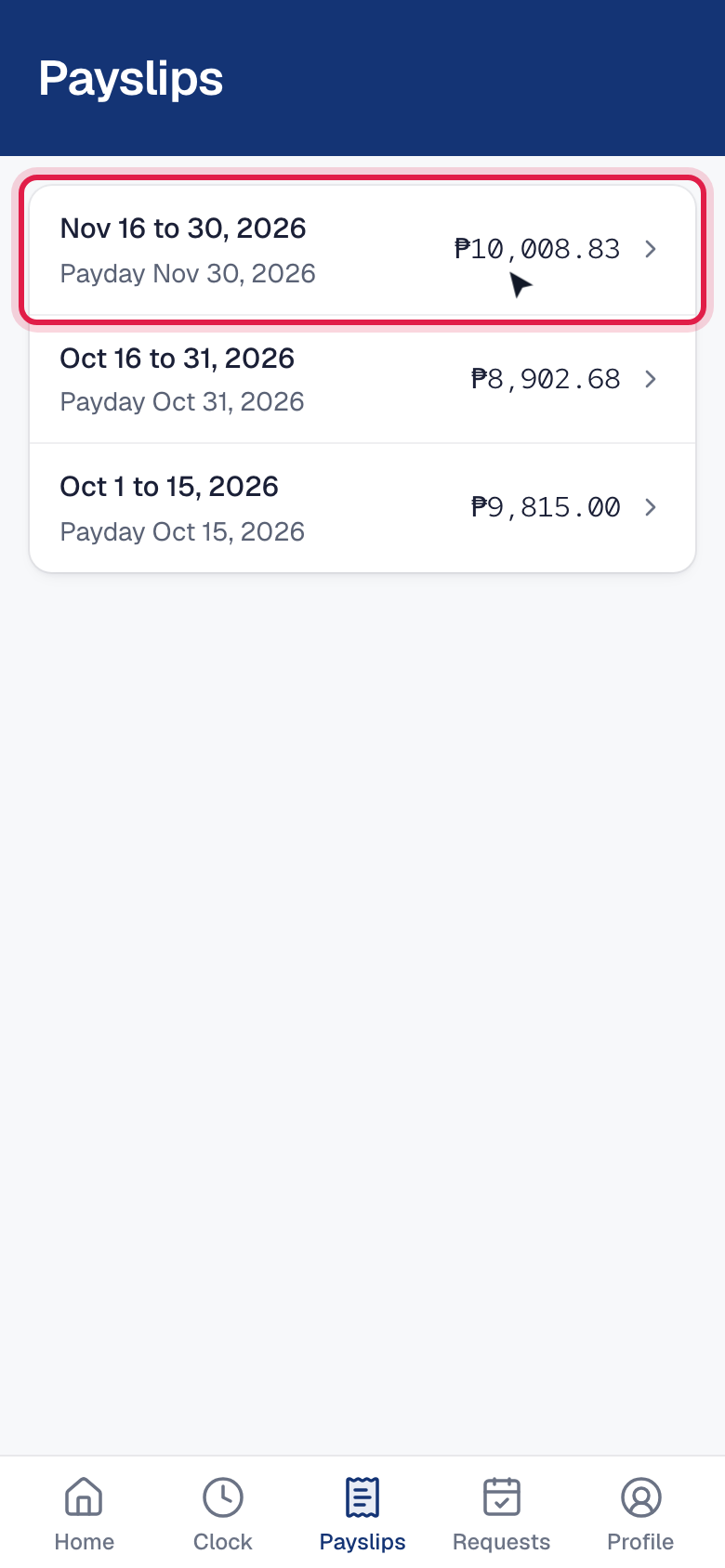
- Frontline staff with no company email never see their payslips: Handing out lump-sum cash without showing how rates, overtime, lates, and SSS shares were calculated breeds quiet resentment until someone walks into DOLE.
- Rules change verbally from shift to shift: Without a signed starter handbook and consistent timekeeping rules, employees feel singled out when you enforce tardiness penalties.
- Scrambling for records the night before SEnA: Digging through chat screenshots and notebooks for 18 months of hours and payments turns a 20-minute mediation into an avoidable settlement.
General information for Philippine employers, not legal or tax advice. Sample templates and computations are starting points—verify specific cases with DOLE, BIR, or your accountant or labor counsel before acting on them.