

The short answer
Under Omnibus Rules Book III, Rule X, Section 12 and DOLE DO No. 238, Series of 2023 (Rule III, Section 4), employers must keep DTRs and payrolls for at least 3 years from the date of the last entry. Digital and cloud DTRs satisfy DO 238-23 when you can show or print hard copies during an inspection, and work-from-home (WFH) staff under RA No. 11165 are not exempt field personnel when their hours are trackable.
On this page
The rules in short
Minimum record retention = 3 years for DOLE DTRs, 5 years for BIR tax and payroll books
- 3-year DTR rule (Labor Code Articles 128(f) and 306, Rule X Sec. 12, DO 238-23 Rule III Sec. 4): Keep individual DTRs and payroll records at or about the workplace for at least 3 years from the last entry. Centralized electronic or cloud timekeeping records comply when you can give the labor inspector access or print copies on demand.
- BIR 5-year rule (NIRC Section 235, as amended by RA 11976 / EOPT Act and BIR RR No. 7-2024, Sec. 4): The old 10-year tax retention rule is gone. Keep payroll registers, tax returns, and accounting books for 5 years from the day after the return due date (or late filing date) of the last-entry year (see our full digital 201 file retention guide).
- Compressed workweeks (DOLE DA No. 02, s. 2004 and DA No. 02, s. 2009): Compressing a 48-hour week into fewer than 6 days (up to 12 hours of actual work a day without daily overtime) requires voluntary written agreement of a majority of covered staff, no cut in meal breaks or benefits (Article 100), and prior notice to DOLE via the DOLE Establishment Report System or your DOLE Regional Office. Whenever work involves hazardous substances, chemicals, airborne contaminants, or prolonged noise, DA 02-04 requires OSH threshold-limit certification from an accredited safety practitioner or safety committee—and covered health personnel in 1M+ cities remain subject to the Article 83 40-hour clinic rule.
- Work-from-home and hybrid staff (RA 11165 and DOLE DO 237-22): Telecommuting must be voluntary, documented with proof of mutual agreement kept for at least 3 years, and reported through the DOLE Establishment Report System (Section 10). Remote hours count as regular workplace hours, and remote staff are not field personnel unless their actual hours cannot be determined with reasonable certainty.
Why lost paper DTRs lose DOLE cases
Many small shops toss paper bundy cards into a storeroom box or let a cheap biometric machine overwrite old logs after 6 months. Because workers have 3 years to file money claims under Labor Code Article 306, missing records often decide the case:
- Regular pay, holiday pay, leave, and 13th month claims: In Supreme Court rulings including Loon v. Power Master, Inc. (G.R. No. 189404, 2013) and Zonio v. 1st Quantum Leap Security Agency (G.R. No. 224944, 2021), the employer holds custody of DTRs and payrolls. When an employer cannot produce them, courts treat the missing records against the employer on wage differentials, regular holiday pay, Service Incentive Leave, and 13th month pay.
- Overtime and holiday/rest-day work premiums: Under Lagatic v. NLRC (G.R. No. 121004, 1998) and Zonio, the employee first has to prove extra hours or actual holiday/rest-day work were rendered. Still, an employer with missing DTRs has no solid record to rebut screenshots or chat logs.
- Managerial and non-agricultural field staff: Under Rule X, Section 9, managerial employees and unsupervised non-agricultural field personnel do not need individual time cards, though employers still keep a basic record of their daily attendance.
Compressed workweeks: worked peso example
Suppose Paolo runs a small e-commerce business with 8 back-office order coordinators (non-hazardous desk work) who agree in writing to move from 6 days × 8 hours (48 hours) to 4 days × 12 hours of work (48 hours) so they save two commute days. Note that DOLE's 12-hour daily cap excludes the 60-minute unpaid meal break under Article 85, so a 12-hour workday means 13 hours total span (for example, 7:00 AM to 8:00 PM with a 1-hour lunch).
Carlo is paid ₱100.00/hour (equal to ₱800.00 for an ordinary 8-hour day). Look at his weekly pay with a valid DOLE-notified compressed workweek versus an informal verbal 12-hour shift:
| Setup for 4 days × 12 work hours (48 hrs total) | Regular pay | Overtime pay (125%) | Weekly pay owed |
|---|---|---|---|
| Valid DOLE-notified compressed workweek | 48 hrs × ₱100.00 = ₱4,800.00 | ₱0.00 | ₱4,800.00 |
| Informal 12-hour shifts (no written consent/notice) | 32 hrs × ₱100.00 = ₱3,200.00 | 16 hrs × ₱125.00 = ₱2,000.00 | ₱5,200.00 |
Running 12-hour days without signed majority consent and prior DOLE filing exposes the business to ₱400.00/week in unpaid overtime per employee. Over 50 working weeks a year, that reaches ₱20,000.00/year per employee (₱160,000.00 across 8 coordinators).
How to file a compressed workweek properly
- Get signed majority consent: Put the exact shift hours, 60-minute meal break, workdays, rest days, and start date on a sheet signed by a majority of covered staff. Keep it on file.
- File with DOLE before starting: Submit the DOLE Compressed Workweek / Flexible Work Arrangement report online via the DOLE Establishment Report System or at your DOLE Field/Regional Office before the new schedule begins.
- Respect the limits: Work beyond the agreed compressed daily hours (or beyond 48 hours/week) still earns overtime pay. If you instead reduce workdays temporarily during a business slowdown under DA No. 02, s. 2009, keep the reduction within 6 months and file the same prior DOLE notice.
Work-from-home DTRs and the 2026 NLRC venue rule
Many small shops and agencies tell remote customer-support or bookkeeping staff, "Just finish your tasks, no need to clock in." Two rules make informal remote tracking risky:
- Remote staff are not field personnel: Under DOLE DO 237-22 (RA 11165 Revised IRR), a remote employee with set shift hours, scheduled calls, or live chat coverage has trackable hours. Put your telecommuting terms in writing (work hours, break times, how overtime past 8 hours or replies past 10:00 PM require prior written approval, and how DTRs are logged), keep proof of mutual agreement for 3 years, and submit the telecommuting report in the DOLE Establishment Report System.
- 2026 NLRC filing venue rule: Under the 2025 NLRC Rules of Procedure (En Banc Resolution No. 09-25, Rule IV, Section 1, effective January 13, 2026), workers may file complaints at the Regional Arbitration Branch covering their residence or workplace, and "workplace" explicitly includes an alternative WFH workplace (see our employee handbook and DOLE SEnA guide). Clean digital DTRs protect you no matter where remote staff live.
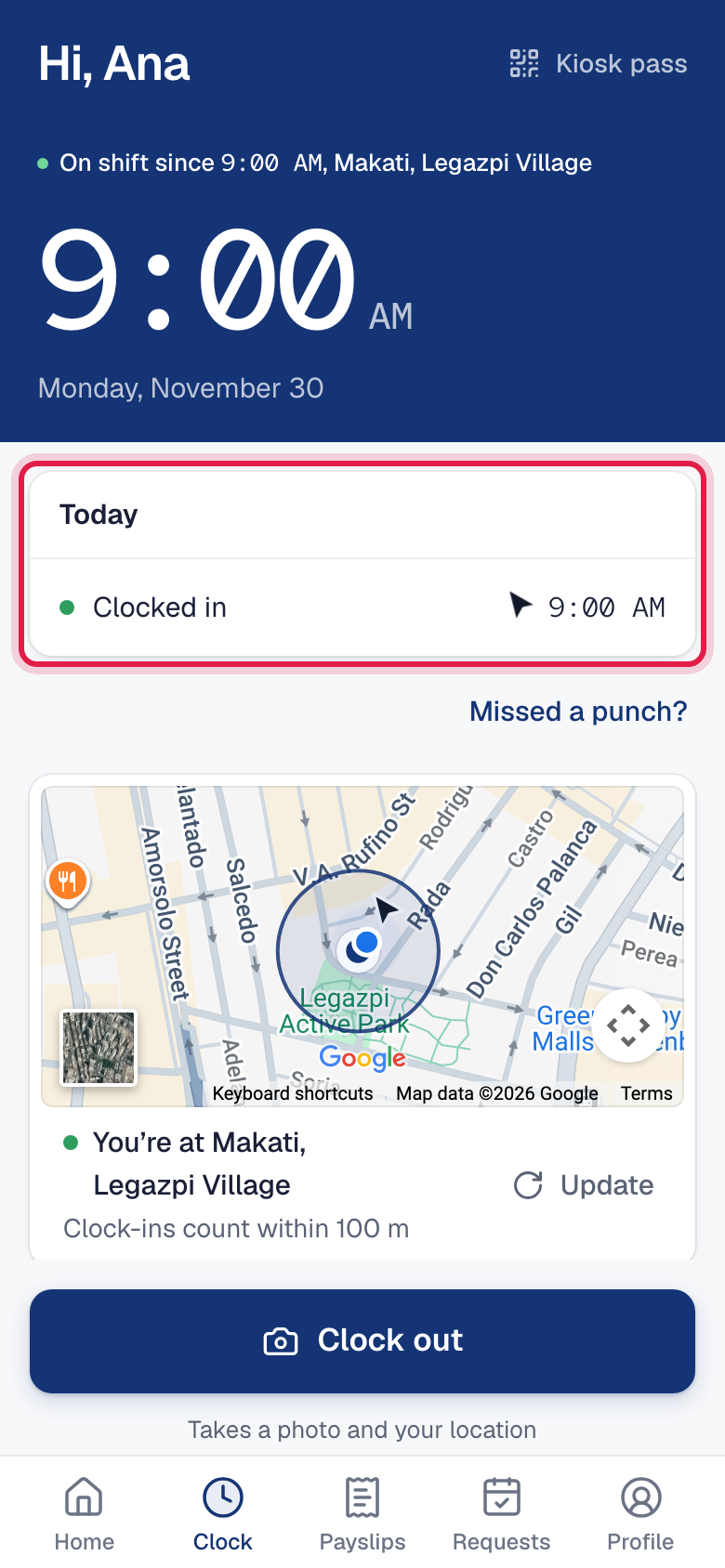
If you still track attendance in spreadsheets, start with our free PH DTR Excel template and archive signed copies every cutoff, and review our missed clock-out cutoff DTR checklist.
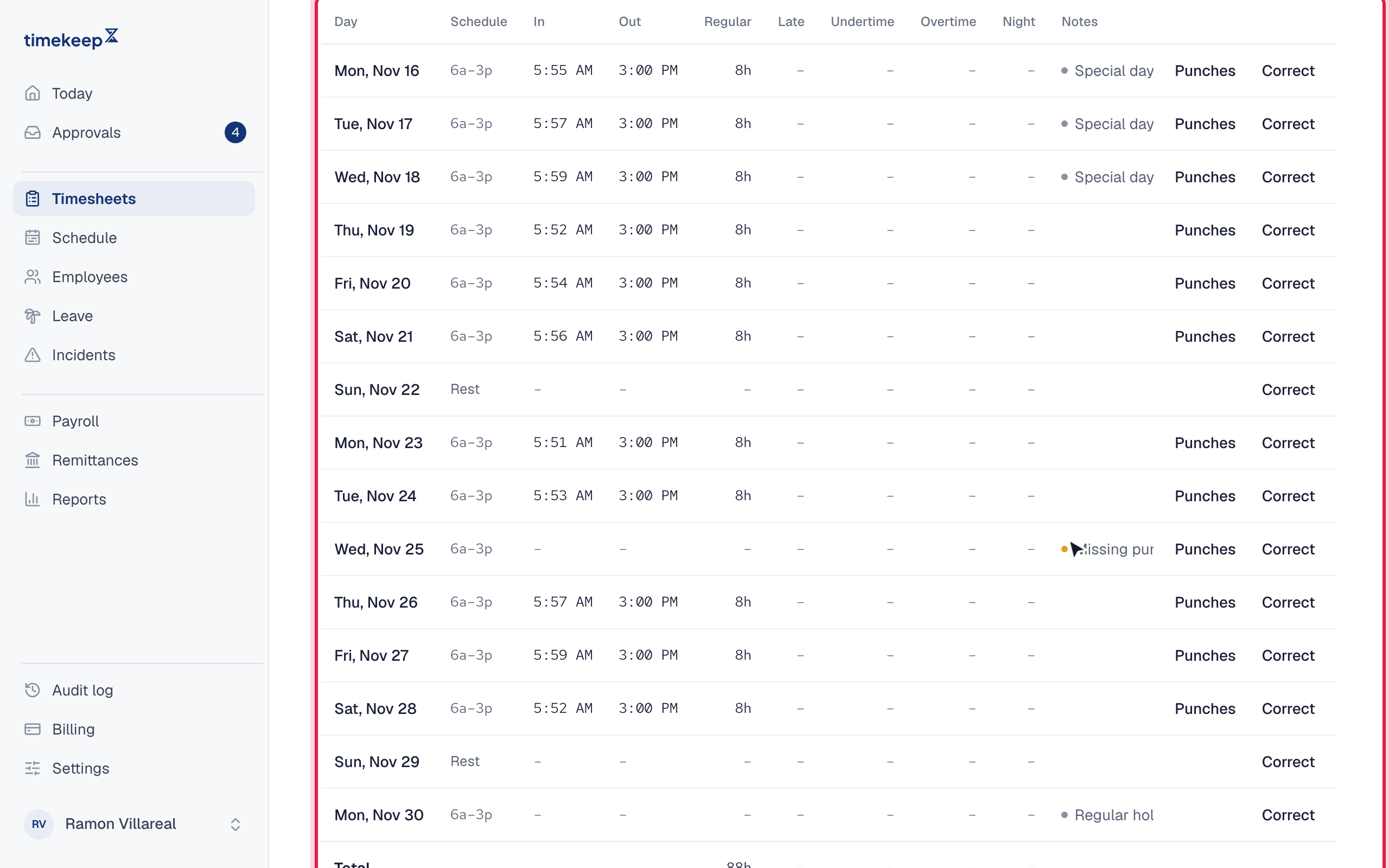
Three DTR archiving mistakes to fix before an inspection
- Faded thermal paper and lost USB logs: Paper bundy cards fade within a year, and standalone fingerprint units overwrite older buffers once memory fills up.
- Silent edits after cutoff: Changing a remote worker's hours directly in Excel overwrites the original entry with no record of who changed it or why.
- Late-night chat creep: Without a clear clock-out and overtime approval rule, remote customer-support staff answering messages at 10:30 PM create surprise Night Shift Differential and overtime disputes months later.
General information for Philippine employers, not legal or tax advice. Sample templates and computations are starting points—verify specific cases with DOLE, BIR, or your accountant or labor counsel before acting on them.